

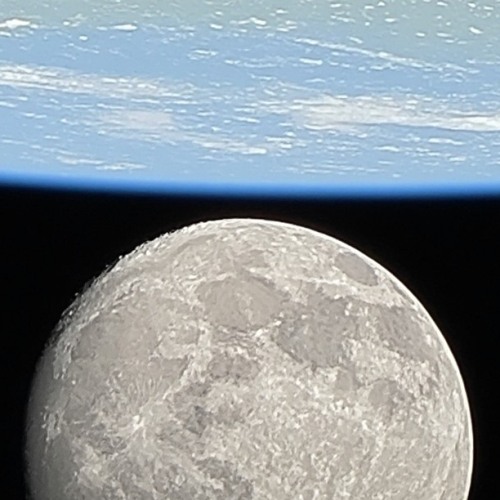
The voyage of Artemis II
The recent surge of human activity around the Moon marks a turning point in space exploration, blending cutting edge engineering with a renewed sense of curiosity about our closest celestial neighbour. At the centre of this momentum is NASA’s ambitious Artemis program, particularly the much anticipated Artemis II mission, which aimed to send astronauts on a journey around the Moon and back to Earth.
The mission successfully ended its ten day journey around the Moon. Launching on April 1, 2026 from the Kennedy Space Centre. The mission carried a crew of four astronauts. Commander Reid Wiseman, Pilot Victor Glover, and Mission Specialists Christina Koch and Jeremy Hansen. This voyage marked the first time humans have ventured beyond low Earth orbit since the last Apollo mission when Apollo 17 was launched on December 7th 1972.
Unlike the historic Apollo 8 mission that first carried humans around the Moon more than half a century ago, this new mission is not just a symbolic return. It represents a stepping stone toward sustainable lunar exploration and eventually human missions to Mars. Artemis II is designed to test the spacecraft systems with a crew onboard. Ensuring that everything from life support to navigation works seamlessly in deep space conditions.
The spacecraft at the heart of the mission is the Orion spacecraft, mounted atop the powerful Space Launch System (SLS). Together, they form the most advanced human-rated exploration system ever built. Orion is equipped with state-of-the-art avionics, radiation protection, and life-support systems that far surpass the capabilities of the Apollo-era command modules. Meanwhile, the SLS provides the thrust needed to break free from Earth’s gravity and set course for the Moon.
What makes this mission particularly fascinating is its trajectory. Rather than entering a stable lunar orbit, Artemis II will perform a “free-return trajectory,” looping around the Moon and naturally returning to Earth using gravitational forces. This path minimizes fuel use and provides a built-in safety mechanism, if propulsion systems fail, the spacecraft will still be pulled back toward Earth. It’s a clever blend of physics and engineering that underscores how far mission design has evolved.
The mission also highlights growing international collaboration. Agencies like the European Space Agency (ESA) have contributed key components, including the service module that powers Orion. This cooperation signals a shift from the competitive space race of the 20th century to a more collaborative approach in the 21st, where multiple nations work together to achieve shared goals in space.
Artemis II sets the stage for future lunar landings. While this mission will not touch down on the Moon’s surface, it tested the systems needed for Artemis III, which aims to land astronauts near the lunar south pole. This region is of particular interest due to the presence of ice. A vital resource that could be used for drinking water, oxygen, and even rocket fuel. Establishing a sustainable presence there could transform the Moon into a hub for deeper space exploration.
Public interest in lunar missions has also been reignited. With high-definition video, real-time updates, and global media coverage, people around the world were able to follow the journey. This level of engagement contrasts sharply with the limited broadcasts of the Apollo era, making space exploration more accessible and inspiring to a new generation.
The mission pushed the Orion spacecraft and the Space Launch System (SLS) rocket to their limits. During their flight, the crew achieved a "free-return" lunar flyby, whipping around the far side of the Moon at a distance of approximately 4,070 miles from the lunar surface. In doing so, they set a new deep-space record, reaching a maximum distance of 252,756 miles from Earth, the furthest any human has ever travelled into space.
Beyond the statistics, the mission provided breathtaking visual data. The astronauts captured high resolution images from behind the Moon and even witnessed a total solar eclipse from their unique vantage point in deep space. These sights served as a reminder of the mission's broader purpose to test life support systems and navigation for the upcoming Artemis III mission, which aims to land on the moon’s South Pole.
To give more context of the recent mission, here are some facts about space flights.
Astronauts travelling to the International Space Station do not have to leave Earth’s orbit as it is only around 400km (250 miles) from Earth.
While travelling to the moon the astronauts have to leave Earth’s orbit but still remain within Earth’s gravitational influence. Although the nearer they get to the moon, the more the Moon’s gravitational influence takes over.
The distance to the Moon is approximately 384,400 km (238,855 miles) which does vary as the Moon travels in an elliptical orbit. This means you could put the equivalent of 30 Earth sized planets between Earth and the Moon.
The Moon is slowly moving away from Earth, getting about 3.8cm (1.5 inches) farther away each year.
Astronauts cannot breathe on the moon because it lacks a breathable atmosphere. The moon is a vacuum with no oxygen, meaning exposure would be fatal.
Scientists have chosen the Moon’s south pole to build a station due to the possibility of constant sunlight for solar power and the nearby craters show the possibility of frozen water which coukd support life and create rocket fuel.
To protect astronauts from, radiation, extreme temperatures, and meteorites, bases will probably be covered with lunar soil or, for more advanced bases, built into existing lava tubes. It is also hoped that robotic systems will turn lunar dust into moon bricks or concrete for structures.