

Bath Assembly Rooms bigger than thought
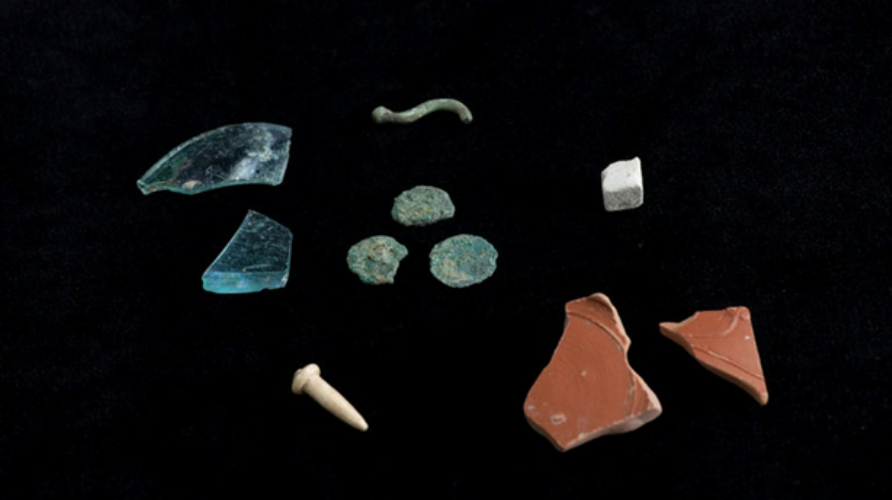
Recent excavations beneath the National Trust's Bath Assembly Rooms have uncovered a network of ancient Roman ditches alongside an array of fascinating artifacts. These discoveries include historical pottery, old coins, fine glassware, and a rare fragment of a military helmet, revealing substantial activity in an area previously unexplored for Roman settlement. Experts note that these specific finds significantly expand the known footprint of Roman occupation in the city. They also strongly suggest that further archaeological remains likely survive undisturbed beneath neighboring Georgian streets and properties that have never been investigated.
While Bath's iconic Roman Baths and temple complex are globally renowned, Roman activity has historically been recorded mostly to the north along Northgate Street and through the Walcot area following the Fosse Way. These new discoveries effectively extend that historical mapping westwards into ground previously inaccessible due to the grand Georgian architecture constructed above. This indicates that the ancient settlement of Aquae Sulis extended much farther than earlier historians understood.
The breakthrough occurred during the National Trust's ongoing £20 million restoration of the Assembly Rooms. Tatjana LeBoff, Project Curator, emphasized that finding Roman history under this landmark is major news for Bath. She noted that the uncovered items provide a vivid window into the lives of people who lived and worked there nearly 2,000 years ago, helping researchers better understand how local communities evolved across the centuries.
Excavation teams from Wessex Archaeology unearthed substantial ditches dating back to the second and third centuries. From a single ditch trench, teams recovered nearly 60 distinct fragments of Roman pottery, glass vessels, animal bones, roof tiles, three separate Roman coins, and a limestone tessera that likely belonged to an ancient mosaic floor.
The most intriguing discovery remains the fragment of a Roman military helmet. This artifact serves as tangible evidence that military personnel were actively involved in constructing the city and its radiating road networks, with some soldiers likely retiring to nearby countryside villas. Marek Lewcun of Wessex Archaeology expressed immense excitement about digging up to a meter beneath the famous floorboards, noting that while the exact nature of the site's Roman operations remains mysterious, future urban digs could reveal more.
The historic Bath Assembly Rooms, originally designed by John Wood the Younger and opened in 1771, served as the elegant social heart of Georgian high society, hosting figures like Jane Austen and Charles Dickens. The property is scheduled to reopen to the public in 2027 as a transformed visitor attraction.
www.nationaltrust.org.uk/visit/bath-bristol/bath-assembly-rooms
Picture: National Trust