
Grimspound PL20 6TB
Entry: Free for Everyone
Open: seasonal - check website
Dogs: on leads
Reviews: 0
History:
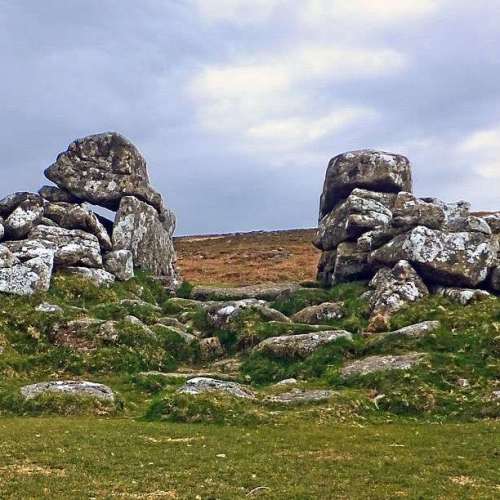
Grimspound is one of the best-known prehistoric settlements on Dartmoor, probably dating from the late Bronze Age (about 1500–800 BC).
The remains of 24 houses enclosed within a stone wall, and further houses outside the enclosure, lie in a fold in the hills about 450 metres above sea level, between Hookney and Hameldown tors.
Grimspound in the bronze age:
The earlier Neolithic period, from about 4000 BC, witnessed a transition from a hunting and gathering lifestyle towards a growing reliance on farming. By 2500 BC the early farmers were moving into upland areas like Dartmoor, and settled farms and field systems were becoming commonplace.
The remains of the characteristic roundhouses (also known as hut circles) in which people lived can still be seen across Dartmoor. Sometimes they stand on their own, like isolated cottages today; sometimes, as here, they are grouped together in sizeable villages. Such settlements are a defining feature of the Dartmoor landscape.
We do not know precisely how long Grimspound was in use, but by about 1000 BC the settlement pattern was changing. The people living on Dartmoor had cleared the forest, exposing the fragile moorland soil to erosion. Nutrients left the soil, reducing its fertility, and the moor could no longer sustain the same level of occupation.
Parking:
There is limited roadside parking in a layby nearby
Facilities:
None
Notes:
Dartmoor is known for its changeable weather conditions and the site is remote and very exposed.
Contact:
Website: www.english-heritage.org.uk
Tel: 0370 3331181