

Gainsthorpe Medieval Village DN21 4JH
Entry: Free for Everyone
Open: seasonal - check website
Reviews: 0
About:
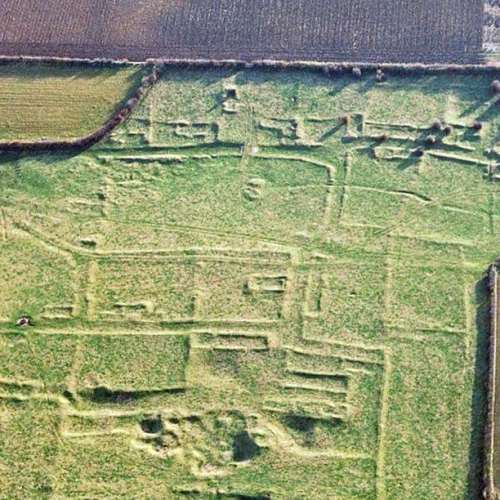
Among the 2,000 or so deserted medieval villages in England, Gainsthorpe in Lincolnshire is one of the most clearly visible and best preserved. Many elements of the village, including houses, barns and streets, survive as a remarkable group of earthworks in an unploughed field. Other parts survive under ploughed fields to the south and west.
Dogs:
Dogs on leads are welcome.
Parking:
A small corner of the farmer's field is set aside for free parking, although it isn't available when in use by the farmer - mainly during harvest time. The parking area is signposted.
Origins and development:
The village of ‘Gamelstorp’ is listed in the Domesday Book of 1086. The Norman lord was Ivo Taillebois, and the Saxon lord at the time of the Norman Conquest, 20 years earlier, was Ulgar. The small village or hamlet was assessed for tax as having just one carucate (the notional amount of land that a plough team of eight oxen could till in a year) of arable land.
By 1208, when ‘Gameslestorp’ was listed in a royal ‘fines’ document (a list of legal land tenure agreements), the village seems to have been rather larger. There were at least 19 fields surrounding the village, occupying 108 acres (44 hectares), not including the communally farmed open fields. The village also had a chapel, a windmill and a bridge.
The documentary evidence does not, unfortunately, reveal how the village declined or precisely when it was deserted. Land at Gainsthorpe was granted to the small priory of Newstead-on-Ancholme (a few miles north-east of the village) in 1343. The population may well have declined as a result of the Black Death of 1348–9. However, village land was part of the estate of the Duchy of Cornwall by the late 14th and 15th centuries, suggesting that some village farms survived, even if the village itself had shrunk.
Facilities:
There are public toilets and places to eat and drink in nearby Kirton in Lindsey.
Notes:
Farm livestock is likely to be present.
Contact:
Website: www.english-heritage.org.uk
Tel: 0370 3331181