

Tigger's Green Paw
Pear
Animal Safety: Dogs: Yes Cats: Yes Rabbits: Yes
Free Grazing: In moderation
Pears are safe but the seeds and stems should be removed first. As with a lot of food, too much could cause weight gain, upset stomach etc.
Pear trees can grow to over 9m (20 ft) tall, depending on growing condition and species.
Lifespan: A pear tree grown from a nursery sapling (typically 1-2 years old) will generally start to produce fruit within 3 to 7 years of planting, depending on the variety and the rootstock it is grafted onto.
Pears (Pyrus communis) have a rich history in the UK
They were likely introduced by the Romans.
These trees, which can live for many years, were even mentioned in the Domesday Book of 1086 as boundary markers.
While over 3,000 varieties exist globally, a limited number dominate the British market and gardens.
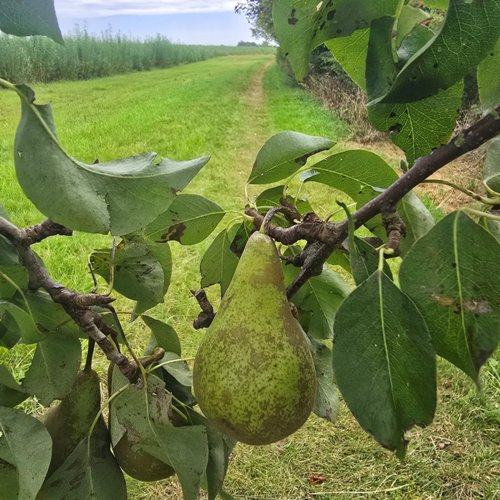
The Conference pear is the UK's most popular commercial variety, widely available in supermarkets. Recognisable by its long neck and russeted green skin, it has buttery, sweet flesh that can be enjoyed both firm or fully ripe. Other popular varieties include Comice , a sweet dessert pear and Concorde.
Today, pears remain versatile in the kitchen, suitable for baking, poaching with ingredients like red wine, or pairing with strong cheeses.
Growing pears in the UK is straightforward once established, thriving in sunny, sheltered spots. A key characteristic is that most European pears are harvested just before they are ripe and allowed to complete the ripening process off the tree, often indoors.
Pears are a healthy fruit, packed with fibre, vitamins (C, K), and antioxidants, making them a nutritious addition to any diet.
Photograph: Ian Stephens