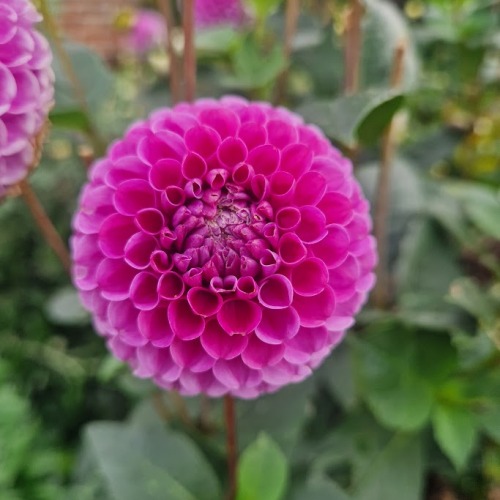


Tigger's Green Paw
Dahlias
Animal Safety: Dogs: No Cats: No Rabbits: No
Free Grazing:
Free grazing is not advised. All parts of the plant contain toxic compounds, with the highest concentration found in the tubers beneath the soil, allowing animals to roam freely near them poses a significant health risk.
Lifespan:
Dahlias are perennials and can last for decades if the plant is properly cared for. As they are very sensitive to freezing temperatures, their lifespan depends entirely on winter management. In cold climates it is better to dig up, dry, and store the tubers indoors each autumn to replant them the following spring.
Sow, Flower, Harvest Months:
Sow (Planting): April to May.
Flower: July to October.
Harvest: August to October (for cut flowers) and October to November (for digging up for winter storage).
Soil Type:
Dahlias thrive best in rich, deep, sandy soil that drains well. They are heavy feeders and require soil packed with well-rotted compost.
Size:
Dahlias vary in size depending on the variety. From 30 cm to 60 cm (1 to 2 feet), ranging up to 1.5 m to 2 m (5 to 6.5 feet), with some individual flowers spanning up to 30 cm (12 inches) across. They can be grown in a variety of colours
About:
Dahlias are native to Mexico and Central America. They are closely related to sunflowers, daisies, and chrysanthemums.
History:
The Aztecs originally grew dahlias for decoration, food source, and for medicinal purposes. They also used the long, hollow stems of certain species as natural water pipes.
In 1789 Dahlias were sent to the Royal Botanic Gardens in Madrid, Spain.
The director of the gardens named the flower after the Swedish botanist Anders Dahl.
Photograph: Ian Stephens
www.iansdailynaturephoto.co.uk