

History of... Scottish Wildcat
Name:
Scottish Wildcat
Scientific Name:
Felis Silvestris
Family:
Felidae
Conservation Status:
Critically Endangered
Habitation:
At the edge of woodlands, mountains and moorlands. Usually places with rough grazing.
Discovery:
9,000 years ago. The earliest known fossil remains of wildcats in Great Britain were discovered in Berkshire.
They became part of Scottish culture, even appearing in clan heraldry as early as the 13th century.
Description:
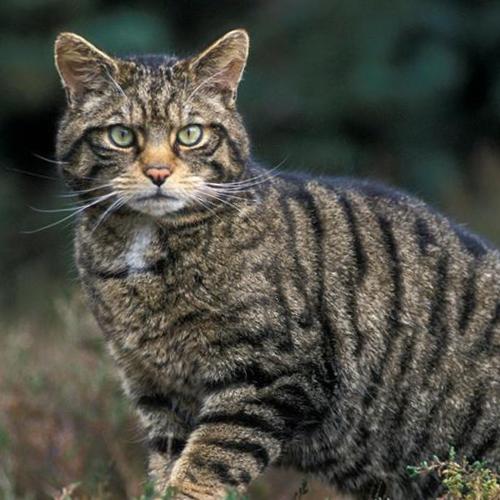
The Scottish wildcat is a small cat with brown mottled fur and markings similar, but not identical, to that of a domestic tabby. It has a distinctive thick, blunt tail with a black tip and rings. The wildcat is stockier and more muscular than domestic cats. They are up to 65 cm long with a 32cm tail, weighing up to 7 kilograms.
Behaviour and Social Structure:
The wildcat is active mostly at dawn and dusk, hunting or maintaining territorial scent markings. Outside of the breeding season, adults live alone and actively avoid other cats, including their own species. Territory size can range depending on prey levels and gender. Females typically have smaller territories of 1 to 4km². Males have much larger territories that can exceed 20 to 40 km², which is designed to overlap with the territories of multiple females.
Diet and Feeding Habits:
The Scottish wildcat is an obligate carnivore, meaning its diet consists exclusively of meat. They normally hunt for 7 to 9 hours a day. Their main food source is rabbits. They also eat small animals and rodents and a variety of bird species. During harsh winters or times of scarcity they will eat deer and sheep carcasses. Some wildcats make use of humans by hunting pheasants, chickens and ducks. They use a stalk and pounce method, relying on developed sight and hearing to locate prey, before leaping up to three meters.
If they cannot finish eating a kill, they will often bury or hide uneaten remains in a cache to consume later.
Breeding:
During the mating season, which occurs from January to March, males will search out females to mate with.
Wildcats produce a litter of between one and eight young (kittens) after a gestation period of around two and a half months.
The kittens are weaned at 12 weeks but will stay with their mother up to about 5 months old, learning crucial survival skills like hunting. Once independent, they leave to establish their own territories.
The life expectancy of a Scottish wildcat varies significantly between those in the wild and those in captivity. In the wild, they live foraround 7 to 10 years. In captivity they can live for 15 to 16 years.
Threats to Population:
The main threat to Scottish wildcats is extinction due to breeding with domestic cats. Collisions with vehicles are another common causes of death. Domestic and feral cats transmit lethal viruses such as Feline Leukaemia Virus (FeLV) and "cat flu" to wild populations. Young wildcats during their first winter are targeted by predators like foxes and golden eagles. Despite legal protection, they are occasionally killed through accidental snaring or shooting when mistaken for feral domestic cats. Severe Highland winters can lead to starvation, particularly in younger or injured individuals.