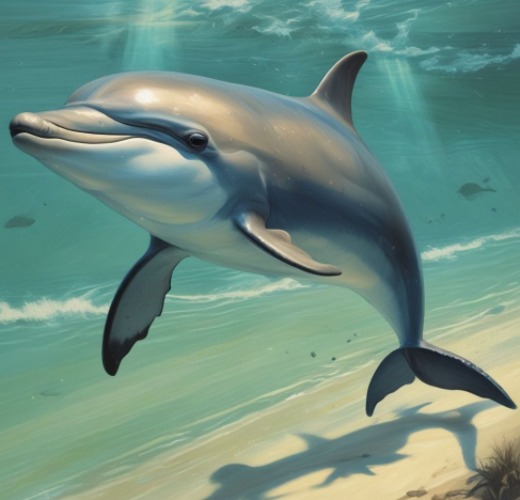


History of... Common Bottlenose Dolphin
Name:
Common Bottlenose Dolphin
Scientific Name:
Tursiops truncatus
Family:
Delphinidae.
Conservation Status:
Least Concern.
Habitation:
Found in temperate and tropical oceans worldwide, except the freezing polar waters of the Arctic and Antarctic.
Discovery:
The Common Bottlenose Dolphin has existed for over 5 million years. They were first formally classified by the German naturalist Montagu in 1821.
Description:
Dolphins are a muscular marine mammal with a famously smiling facial expression. Their short stubby snout resembles an old fashioned glass bottle. Their length and weight vary based on habitat. Coastal dolphins are 2 to 2.5 metres long, while larger offshore dolphins are up to 4 metres and weigh over 500 kg. They have a dark grey back fading into lighter grey at the sides, and a white belly. The dorsal fin is curved towards the tail and located in the middle of the back.
Behaviour and Social Structure:
Dolphins live in social groups called pods. Group sizes are constantly changing as individuals join or leave. Offshore pods can merge into super pods of several hundred.
They are known for their high intelligence. Some dolphins wear sponges on their beaks to protect themselves while foraging on the rough, rocky seafloor.
Diet:
Dolphins are carnivores and their primary diet is fish, squid, and crustaceans.
Breeding:
Female dolphins reach maturity between 5 and 13 years of age. They give birth to a single calf every 3 to 6 years. Gestation lasts around 12 months. Calves are born underwater, tail first, and are immediately guided to the surface by the mother to take their first breath. Calves nurse on milk containing up to 40% fat for 18 to 20 months. Young remain with their mothers for up to 5 years to learn vital survival and social skills.
Threats to Population:
Common Bottlenose Dolphins only have two natural predators but also face threats from human activity.
Sharks:
Large sharks and Killer Whales are natural predators, with many dolphins bearing scars.
Fishing:
Accidentally drowning after becoming entangled in fishing gear, gillnets, and crab pot lines. Overfishing by commercial fleets also reduces their food source.
Marine Pollution:
Poisoning from chemicals also builds up in their blubber. Passing from mothers to calves through milk causes immune deficiencies.
Acoustic Disturbance:
Underwater noise from shipping, construction, and military sonar disrupts their echolocation, causing stress, disorientation, and strandings.
Vessel Collisions:
Boat traffic and tourist hotspots leads to accidental ship strikes and injuries.
Habitat Loss:
Development and dredging destroy the shallow bays, river mouths, and lagoons where they feed and raise calves.
Tourism and Harassment:
Whale and dolphin watching boats interrupt normal behaviours, causing stress, and put newborn calves at risk.
Hunting and Live Capture:
Dolphins are hunted for meat or captured for aquariums and marine parks.